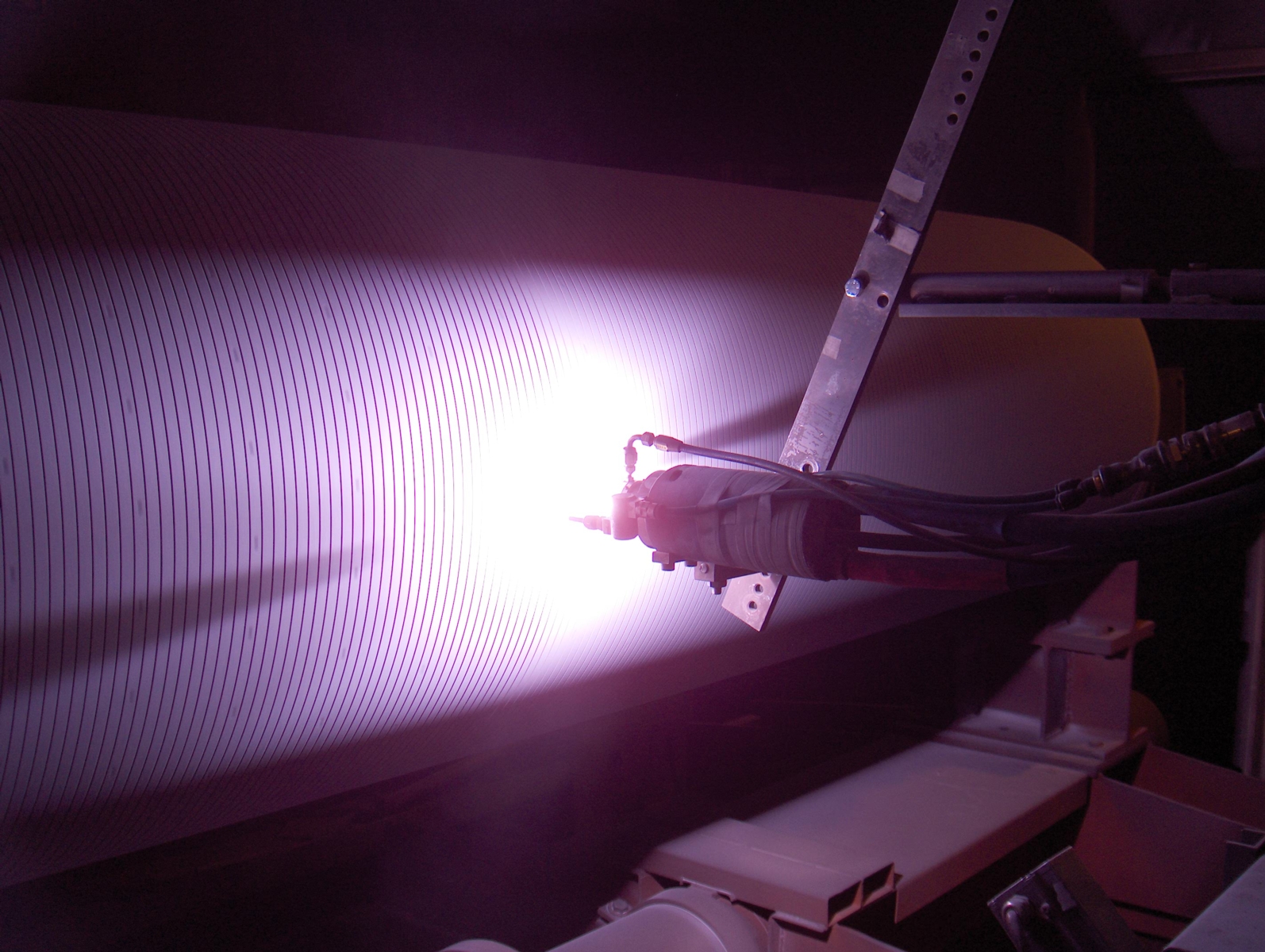
Stainless steel coating at Buser

Stainless steel is considered corrosion-resistant due to its natural passive layer and is used specifically in many industries. Nevertheless, the material reaches its functional limits under certain operating conditions—such as high mechanical stress, aggressive media, friction, or specific surface requirements. In such cases, it may be advisable to coat stainless steel specifically.
Coating stainless steel does not primarily serve the material’s basic function, but rather the targeted enhancement of its properties. Depending on the process and coating system, properties such as non-stick properties, lubricity, chemical resistance, or additional corrosion protection can be achieved. Electrical insulation or a surface with a specific color can also be achieved through suitable coatings.
When selecting the appropriate stainless steel coating, it is crucial to consider the component as a whole. In addition to the material itself, factors such as geometry, surface condition, operating temperature, media contact, and mechanical stress play a central role. In practice, isolating individual properties often leads to inadequate results.
Buser Oberflächentechnik AG offers various processes for coating stainless steel, which can be combined or specifically tailored depending on the requirements. These include liquid paint coatings, powder coatings with high-performance plastics, and thermal spraying processes. The goal is to define a technically suitable coating system for each application that reliably meets the required properties.
When is coating stainless steel advisable?
Coating stainless steel is always advisable when the material’s natural properties are insufficient for the specific application or need to be specifically enhanced. Although stainless steel already exhibits good corrosion resistance, in practice functional requirements often take precedence, which cannot be met—or can only be met to a limited extent—without an additional coating.
Typical reasons for coating stainless steel can be classified into several categories of requirements:
- Corrosion protection under demanding conditions
In environments with high humidity, chemical exposure, or chloride-containing media, the natural passive layer can reach its limits. Coatings can act as an additional barrier here and protect the component from attack. - Improvement of sliding and friction properties
Without treatment, stainless steel surfaces often exhibit relatively high coefficients of friction. Suitable coatings—such as solid lubricants or fluoropolymers—can specifically reduce friction and wear. - Non-stick properties and ease of cleaning
In applications involving adhesion, such as in food processing or plant engineering, coatings can reduce surface energy. This significantly reduces the adhesion of media, improving cleaning and process stability. - Chemical resistance
When exposed to aggressive chemicals, stainless steel can be corroded depending on the alloy and operating conditions. Specific coatings can provide additional protection in such cases. - Electrical insulation
Stainless steel is electrically conductive. If electrical insulation is required, insulating coatings can be applied. - Wear protection
The surface of stainless steel can be damaged by mechanical stress, such as friction, particles, or contact movements. In such cases, technical coatings increase the service life of the component. - Coloring and Marking
Stainless steel can also be coated in color or black when visual requirements, functional markings, or glare-free surfaces are needed. However, mechanical and chemical requirements must always be taken into account.
In practice, these requirements rarely occur in isolation. Often, multiple properties must be met simultaneously, such as corrosion protection and non-stick properties, or wear protection and low friction. The selection of the appropriate coating is therefore always based on a combination of operating conditions, material, and desired function.
Which processes are suitable for coating stainless steel?
Various processes are available for coating stainless steel, and these differ significantly in terms of their structure, mode of operation, and the properties they can achieve. There is no single “best” solution—rather, the choice always depends on the specific requirements of the component and its operating environment.
Generally speaking, the processes used at Buser Oberflächentechnik AG can be divided into three groups: liquid paint coatings, powder coatings, and thermal spraying processes. Each of these technologies employs its own technical approach to modifying the surface.
- Liquid coatings are based on liquid coating systems that are applied to the component and then cured. They are particularly suitable for functional layers with specific properties such as non-stick properties, chemical resistance, or electrical insulation. Even complex geometries can be coated relatively well with liquid coatings.
- Powder coatings use solid, mostly polymer-based coating powders that are applied electrostatically and then thermally fused. Depending on the material used—such as fluoropolymers or high-performance plastics—dense, chemical-resistant, and mechanically robust layers can be produced. These processes are frequently used when a robust, closed surface is required.
- Thermal spraying processes differ fundamentally from the two approaches mentioned above. Here, the coating material—such as metal, carbide, or ceramic—is melted or heated to a high temperature and applied to the surface at high speed. This results in functional layers that are used in particular for wear protection, corrosion protection, or special technical requirements.
Which process is suitable in a given case depends, among other things, on the following factors: temperature load, chemical environment, mechanical stress, desired coating thickness, and component geometry. In many applications, it is not only the process itself that is decisive, but also the combination of pretreatment, coating system, and process control.
PTFE Coating on Stainless Steel: Non-stick Properties and Lubricity
PTFE (polytetrafluoroethylene) is a fluoropolymer known in surface engineering primarily for its very low surface energy and low coefficient of friction. When stainless steel is coated with PTFE, a functional surface is created that is specifically designed for non-stick and sliding properties.
The unique structure of PTFE makes it difficult for many media to adhere to the surface. At the same time, the coating significantly reduces friction between contacting surfaces. This combination is relevant in numerous industrial applications, particularly where adhesion, wear, or cleaning requirements are a concern.
Typical properties of a PTFE coating on stainless steel are:
- Distinctive non-stick effect
Many organic and inorganic substances adhere only weakly to PTFE surfaces, which facilitates the removal of media and simplifies cleaning processes. - Very low coefficients of friction
PTFE is among the materials with the lowest known coefficients of friction. This allows sliding movements to be performed more efficiently and with less wear on the material. - Good chemical resistance
PTFE is stable against many chemicals and is therefore suitable for applications involving aggressive media. - Temperature resistance in the medium to high range
PTFE can be used over a wide temperature range, although its exact suitability depends on the coating structure and the application.
Typical applications for PTFE-coated stainless steel include food processing, packaging technology, mechanical engineering, and chemical plants. Wherever media adhere, components slide, or processes must run cleanly and reproducibly, such a coating can offer functional advantages.
At the same time, PTFE is not suitable for every application. The mechanical strength of the coating is limited, particularly under high abrasion or localized stress. The adhesion of the coating to stainless steel also requires careful pretreatment and optimized process control.
Buser Oberflächentechnik AG specifically applies PTFE-based coatings where low friction, non-stick properties, and chemical resistance are paramount. The specific design is always based on the component’s specific operating conditions.
Having Stainless Steel Coated: Consulting and Implementation at Buser
The decision to have stainless steel coated requires precise coordination between the component, operating conditions, and desired function. A one-size-fits-all solution is rarely effective in practice. Instead, a structured approach takes center stage, in which all relevant influencing factors are taken into account.
Buser Oberflächentechnik AG supports this process from the initial analysis through to the finished coating. The goal is to define a coating system that functions reliably under real-world operating conditions.
The typical process can be broken down into several steps:
- Technical Consultation and Requirements Analysis
At the outset, the operating conditions of the component are recorded in detail. This includes, among other things, material, geometry, temperature ranges, media contact, mechanical stress, and the desired function of the coating. Based on this, an initial assessment of suitable processes is carried out. - Component and Surface Analysis
Existing components are inspected for their condition and suitability for coating. Factors such as surface quality, pretreatments, or potential pre-existing damage play a role in this process. - Sampling and Process Selection
Sampling may be advisable for complex requirements. Sample parts or test coatings can be used to verify whether the selected coating systems actually achieve the required properties. - Definition of the Coating System and Process Design
Based on the analysis, the coating system is specifically defined. This includes the process, the materials used, and the necessary pretreatment and process steps. - Mass production or single-part manufacturing
Implementation is carried out as needed for individual parts, small batches, or mass-produced components. The process control is designed to ensure consistent quality. - Failure analysis and optimization of existing solutions
For components already in use, an analysis of wear, corrosion, or coating failure can provide insights into potential for optimization. Based on this, existing coating systems can be specifically adapted. - On-site repair and maintenance
In certain cases, coatings can be repaired or renewed directly on-site. This reduces downtime and enables rapid recommissioning of equipment. - Complete manufacturing of coated components
In addition to coating alone, Buser also offers the option of fully manufacturing components and then applying a tailored coating system.
This structured approach allows stainless steel coatings to be viewed not in isolation, but as an integral part of the component’s function. At Buser, the coating is not merely applied, but specifically designed to meet the actual requirements.