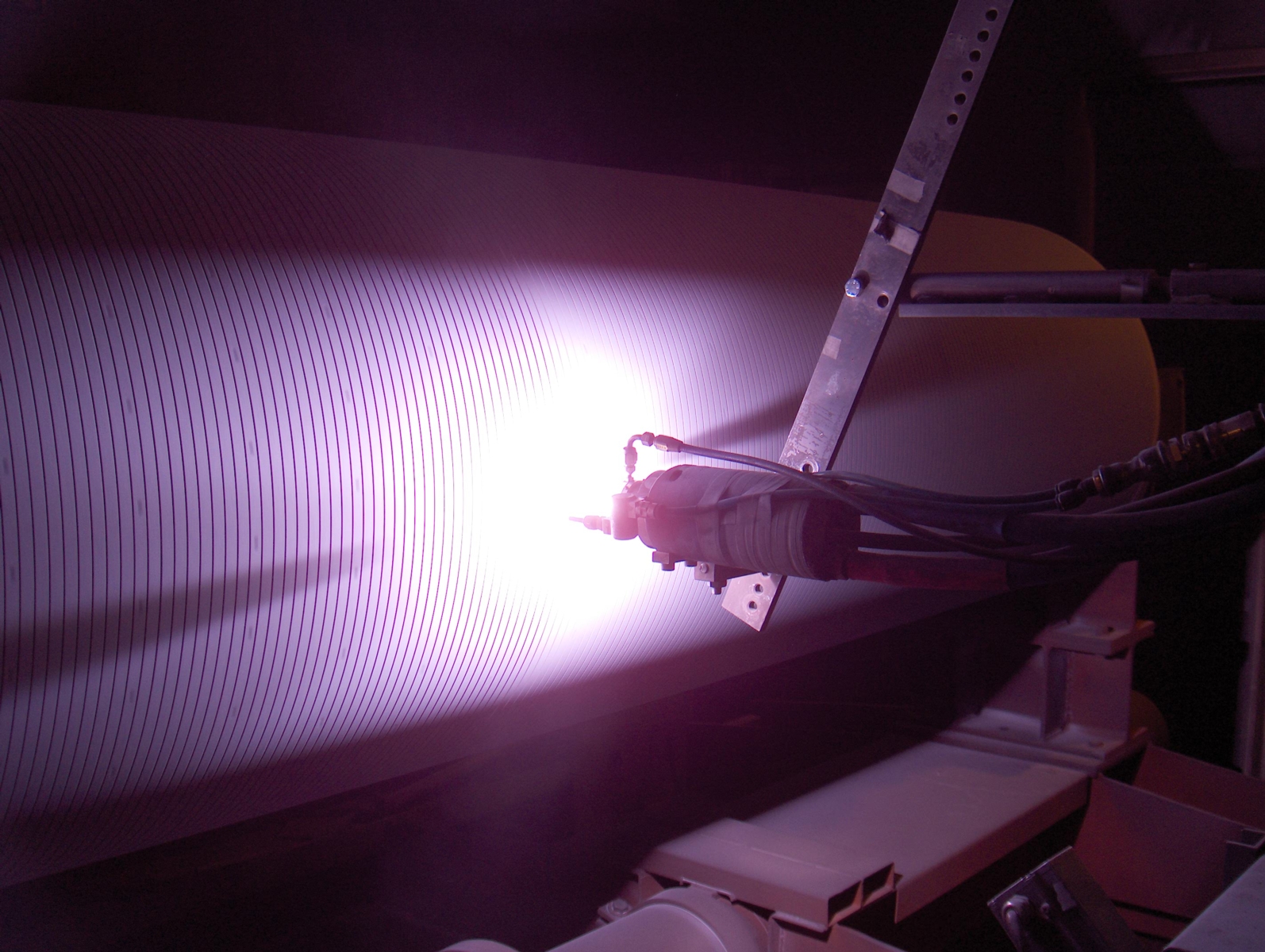
Anti-friction coating from Buser: Improve sliding properties
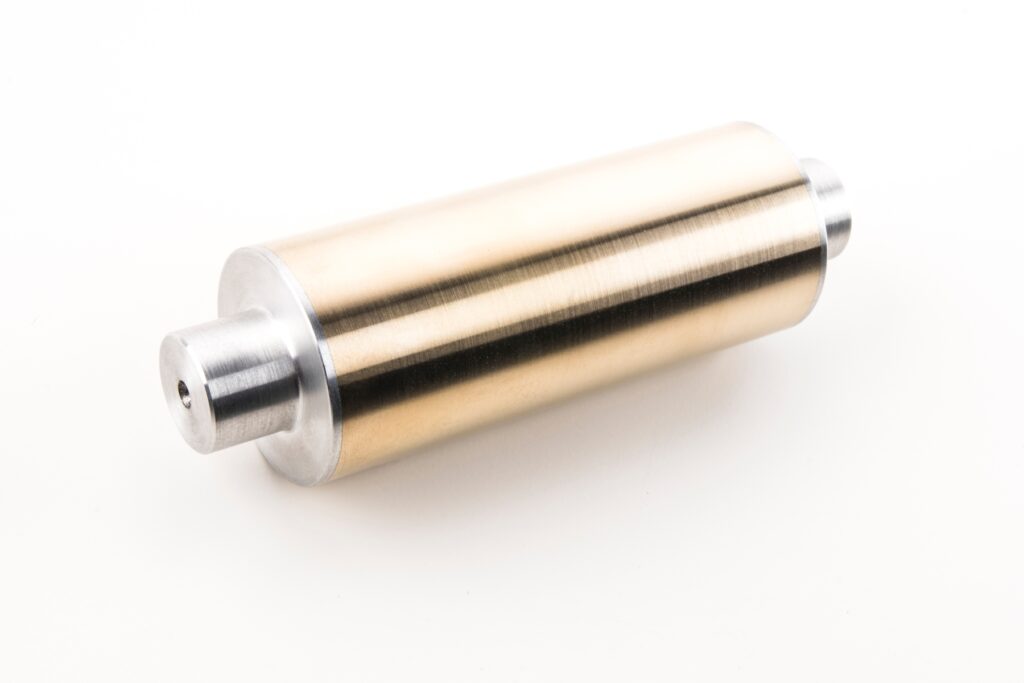
When it comes to minimizing friction and making movements more efficient, anti-friction coatings are often the first choice. Targeted surface modifications can be used to refine components so that they continue to operate reliably and with low friction even under demanding conditions. Whether in machine guides, feed units, or sensitive production processes, the right anti-friction coating increases service life, reduces maintenance costs, and improves the overall performance of the system.
As a specialist in functional surfaces, Buser offers a wide range of solutions tailored to the material, load, and area of application in order to optimize the sliding properties of technical components in the long term.
Why sliding coatings are indispensable in many applications
The stick-slip effect refers to jerky movement between two sliding partners caused by alternating static and sliding friction. This phenomenon can lead to problems in numerous industrial applications: vibrations, irregular movements, increased wear, and noise are typical consequences. Avoiding this effect is crucial, especially in precise linear movements, such as those that occur in feed systems, injection molds, or machine guides.
Prevent stick-slip and reduce drive power
The stick-slip effect can be effectively suppressed by carefully selecting and combining suitable sliding coatings. For example, PTFE-containing systems or solid lubricant-modified coatings with MoS₂ or graphite are used. These not only reduce static friction, but also enable uniform sliding behavior under dynamic loads.
Another advantage is that, as the frictional resistance decreases, less energy is required to set components in motion – the drive power can often be significantly reduced. This not only saves energy, but also reduces the load on mechanical components and extends their service life.
Coating principle & tribology: specifically reducing the coefficient of friction
The effectiveness of a sliding coating is based on its tribological performance, i.e., the interaction of friction, wear, and lubrication at the contact surface. The focus is on the coefficient of friction (µ), which can be specifically reduced by selecting suitable coating materials and surface structures.
Modern sliding coatings use different approaches for this purpose:
- Solid lubricants such as PTFE, MoS₂, or WS₂ are embedded directly into the coating matrix and ensure low sliding friction even during dry running.
- Fluoropolymers (e.g., PTFE, FEP, PFA) offer particularly smooth surfaces with minimal adhesion and are ideal for friction contacts without lubricants.
- High-performance thermoplastics such as PEEK or PEKK combine good sliding properties with high wear resistance, even under the influence of temperature or chemicals.
By selecting the right layer thickness (typically between 5 µm and 3,000 µm), incorporating functional additives, and using the appropriate application method (e.g., injection molding, sintering, thermal spraying), the coefficient of friction can be precisely adapted to the requirements of the respective component.
The result: reduced friction losses, less heat generation, and smooth, low-wear movement even at high cycle rates.
Anti-friction coating for metals: Tailor-made systems for steel, stainless steel, and aluminum
Not all metals behave the same in terms of friction and sliding behavior. That is why Buser offers customized sliding coatings that are precisely tailored to the respective metal substrate. Whether steel, stainless steel, or aluminum: specific system solutions are available for each of these materials that minimize friction and at the same time compensate for the typical weaknesses of the base material.
Steel sliding coating: wear-resistant without lubricants
Steel is robust and load-bearing – but without lubrication it is also susceptible to cold welding and high wear. Our sliding coatings for steel combine wear-resistant hard primers with low-friction top coats. Typical systems include plastics modified with solid lubricants or fluoropolymers, which enable permanent dry running. This allows guides or slides in machines, for example, to operate reliably even under load.
Stainless steel sliding coating: hygienic & corrosion-resistant
Stainless steel scores highly in terms of corrosion resistance. However, its smooth, passive surface often offers poor adhesion for coatings. With specially prepared bonding agent layers and adapted systems, a permanent bond can nevertheless be achieved. Our sliding coatings on stainless steel are therefore frequently used in the food and pharmaceutical industries:
for example in feed systems or valves, where sliding properties and hygiene are equally important.
Aluminum sliding coating: low-friction lightweight construction finishing
Aluminum is light and easily deformable, but tends to adhere and form burrs when in contact with friction. Lubricating coatings remedy this by specifically changing the surface properties. At the same time, they protect the sensitive aluminum structure from mechanical damage. Such coatings are indispensable in the packaging industry, automotive engineering, and pneumatic systems in particular, where they make lightweight, dynamic components durable and efficient.
Material and process diversity: From PTFE fluoropolymer to combination coatings containing solid lubricants
To ensure that a sliding coating is precisely matched to the respective component and area of application, Buser relies on a wide selection of materials, processes, and combination options.
The goal: an optimally coordinated coating system that enables permanently low friction coefficients and high durability.
The most common materials include:
- PTFE, PFA, and FEP-based fluoropolymer coatings
These are characterized by extremely low coefficients of friction and also offer high chemical and temperature resistance. They are ideal for applications where sliding properties must be combined with non-stick and media resistance. - Solid lubricant-containing systems with MoS₂, WS₂, or graphite
Such coatings are ideal for dry running or use as an emergency running layer. They reduce both starting and continuous friction and ensure smooth movement even under intermittent loads. - PEEK, PEKK, and PPS-based high-performance thermoplastics
These materials combine good sliding properties with high scratch resistance, mechanical strength, and thermal stability. They are often used in medical technology, mechanical engineering, or sterilized processes. - Combination coatings with a structure-giving hard material base
The combination of wear-resistant metal or ceramic base layers with lubricious top layers results in hybrid coatings with high load-bearing capacity and low coefficient of friction. This two-stage principle is particularly useful for sliding pairs subject to heavy loads.
Depending on the system, the coating is applied by electrostatic powder coating, wet painting, thermal spraying, or dipping/sintering. This allows for economical processing of both individual parts and series components. The choice of process depends, among other things, on the component geometry, temperature requirements, desired coating thickness, and surface structure.
Industries & Components: Where Anti-Friction Coatings Make a Difference
Lubricating coatings are used wherever moving components need to operate efficiently, with low wear and as little maintenance as possible. Well-matched coatings make a functional and economic difference, especially in dynamic environments with high cycle rates, changing loads, or sensitive production conditions.
Typical industries and applications at a glance:
- Machine and plant engineering
Linear guides, sliding plates, spindles, or feed units become more durable and require less maintenance thanks to low-friction coatings. Material wear is noticeably reduced, especially during long cycle times. - Pharmaceutical and medical technology
In sterile environments, lubricant-free components are required—for example, in pistons, valve seats, or guide components. Sliding coatings enable clean movements without the risk of contamination. - Plastics and packaging industry
Molds, grippers, and tools benefit from sliding surfaces, as processes can be carried out faster, more precisely, and with less friction loss—especially with thermoplastic materials or sensitive products. - Automotive and transportation technology
In door systems, interior components, or chassis bearings, sliding coatings reduce noise and improve haptics. At the same time, they protect against corrosion and enable long-lasting smooth operation. - Food technology
Slippery, non-stick, and easy-to-clean surfaces are crucial here—for example, in filling systems, sealing devices, or feed lines. Lubricating coatings support hygienic and energy-efficient processes.
Because requirements vary greatly depending on the industry, Buser offers customizable coating systems. This allows optimal results to be achieved with every component—whether it’s stainless steel valves, aluminum profiles, or coated steel guides.
Quality, sustainability, and service at Buser
When developing and implementing functional sliding coatings, we rely not only on technological expertise, but also on uncompromising quality and a comprehensive service concept. Every coating solution is tailored precisely to the customer’s requirements, from the prototype to series production.
More than just coating:
From selecting the optimal coating system to providing technical advice during the design phase, we are at your side with our comprehensive expertise. On request, we can also handle complex component geometries or demanding quantities, including pre-treatment, final inspection, assembly, and return delivery.
Interested?