Coating Aluminum: Processes, Quality, Applications

Aluminum is one of the most versatile materials in industrial applications. It is lightweight, conductive, and highly malleable, but susceptible to corrosion and mechanical wear. Using appropriate coating processes, the service life of aluminum components can be significantly extended, and their functionality can be specifically tailored to the application.
Coatings serve several purposes: They protect the metal from environmental influences, reduce friction, improve cleanability, or provide electrical insulation. Depending on requirements such as temperature resistance, chemical resistance, or visual appearance, different processes are used.
Buser Oberflächentechnik AG offers aluminum coatings for a wide range of industries: from the chemical and food industries to mechanical engineering and electronics applications. All processes are tested and documented in accordance with current standards, including coating thickness measurement per ISO 2360, adhesion testing per ISO 2409, and corrosion testing per ISO 9227. This results in functional coatings that are precisely tailored to the specific application.
Why coat aluminum?
Although aluminum naturally forms a thin oxide layer that protects it from corrosion, this protective layer is sensitive to mechanical stress, aggressive media, or high temperatures. A targeted aluminum coating reinforces or extends the metal’s natural protective mechanisms and enables components to be specifically adapted to their operating conditions.
Among the most important reasons for coating aluminum are:
- Corrosion protection: In humid or chemically aggressive environments, a suitable coating prevents the progression of electrochemical reactions.
- Wear protection: Surfaces with hard-material or polymer coatings resist friction and abrasion over extended periods.
- Chemical resistance: Fluoropolymer or ceramic systems protect the base material from acids, alkalis, and solvents.
- Aesthetic requirements: Coatings enable specific colors and gloss levels or a matte technical finish.
- Lubricity and non-stick properties: PTFE, PFA, or sol-gel coatings minimize adhesion and facilitate cleaning.
- Electrical insulation or conductivity: Depending on the system, aluminum can be coated to be insulating, conductive, or even electrically conductive.
Coated aluminum components are found in numerous industries, such as in chemical processing plants, food production lines, mechanical engineering, and medical devices. The choice of process always depends on the mechanical, thermal, and regulatory requirements of the application.
Overview of Processes
The requirements for aluminum surfaces vary considerably depending on the application. The range of available coating processes is correspondingly broad. The choice of process depends on factors such as temperature range, chemical exposure, electrical properties, and required coating thickness.
The service portfolio of Buser Oberflächentechnik AG includes various processes, some of which can be combined. This results in customized solutions for corrosion protection, non-stick properties, wear resistance, or decorative requirements.
Aluminum Powder Coating
In the powder coating of aluminum, a dry powder is applied electrostatically and then baked in an oven. Cross-linking creates a uniform, durable coating. A prerequisite for permanent adhesion is careful pretreatment—typically through degreasing, pickling, or blasting to remove oxides and residues.
The powder coating systems used at Buser include ECTFE (Halar®), PVDF, PEEK, PEKK, and PA, among others. These materials differ in chemical resistance, temperature tolerance, and electrical properties. ECTFE ( ), for example, offers high chemical resistance, while PEEK and PEKK stand out for their thermal stability.
Powder-coated aluminum components are used in many industrial environments—especially where combined protection against corrosion and chemicals is required.
Liquid Coatings/Fluoropolymer Systems (PTFE, PFA, FEP, Sol-Gel)
Fluoropolymer coatings are among the most technically versatile systems for aluminum surfaces. They are applied as liquid coatings and then cured at defined temperatures, creating a dense, chemical- and temperature-resistant surface.
At Buser, we use PTFE, PFA, FEP, and sol-gel systems, among others:
- PTFE (polytetrafluoroethylene): characterized by extremely low friction coefficients and excellent non-stick properties. Ideal for applications where cleanability or material flow are critical.
- PFA (perfluoroalkoxy polymer): combines non-stick properties with higher temperature and chemical resistance (up to approx. 260 °C). Also available in a conductive version for applications with explosion protection requirements.
- FEP (fluoroethylene propylene): produces homogeneous, pore-free coatings with very good media resistance—frequently used in the food and process industries.
- Sol-gel systems: inorganic-organic hybrid coatings with high surface hardness, temperature-stable, and free of PFAS compounds.
All of the systems mentioned can be applied to aluminum and are suitable for components with complex geometries. Depending on the formulation, they are food-safe in accordance with EU Regulation 1935/2004 and—where applicable—EU Regulation 10/2011.
Anodizing (Eloxal/Hard Anodizing)
Anodization—also known as the anodic oxidation process—is not a coating application in the traditional sense, but rather an electrochemical transformation of the aluminum surface. In this process, the base material is anodically polarized in an acidic electrolyte solution, causing a controlled oxide layer to form. This layer is firmly bonded to the substrate, hard, and corrosion-resistant.
There are two main types:
- Decorative anodizing (per ISO 7599): produces uniform oxide layers with typical thicknesses of 5–25 µm. These provide corrosion protection and result in a visually appealing surface that can be colored or left transparent.
- Hard anodizing (per ISO 10074): forms significantly thicker layers up to about 100 µm. The process increases surface hardness to values exceeding 400 HV and is frequently used for heavily stressed components, such as in aviation or mechanical engineering.
Unlike polymer systems, the anodized layer is inorganic and diffusion-open, but can be further densified by subsequent sealing (e.g., in hot water or nickel acetate).
Thermal Spraying
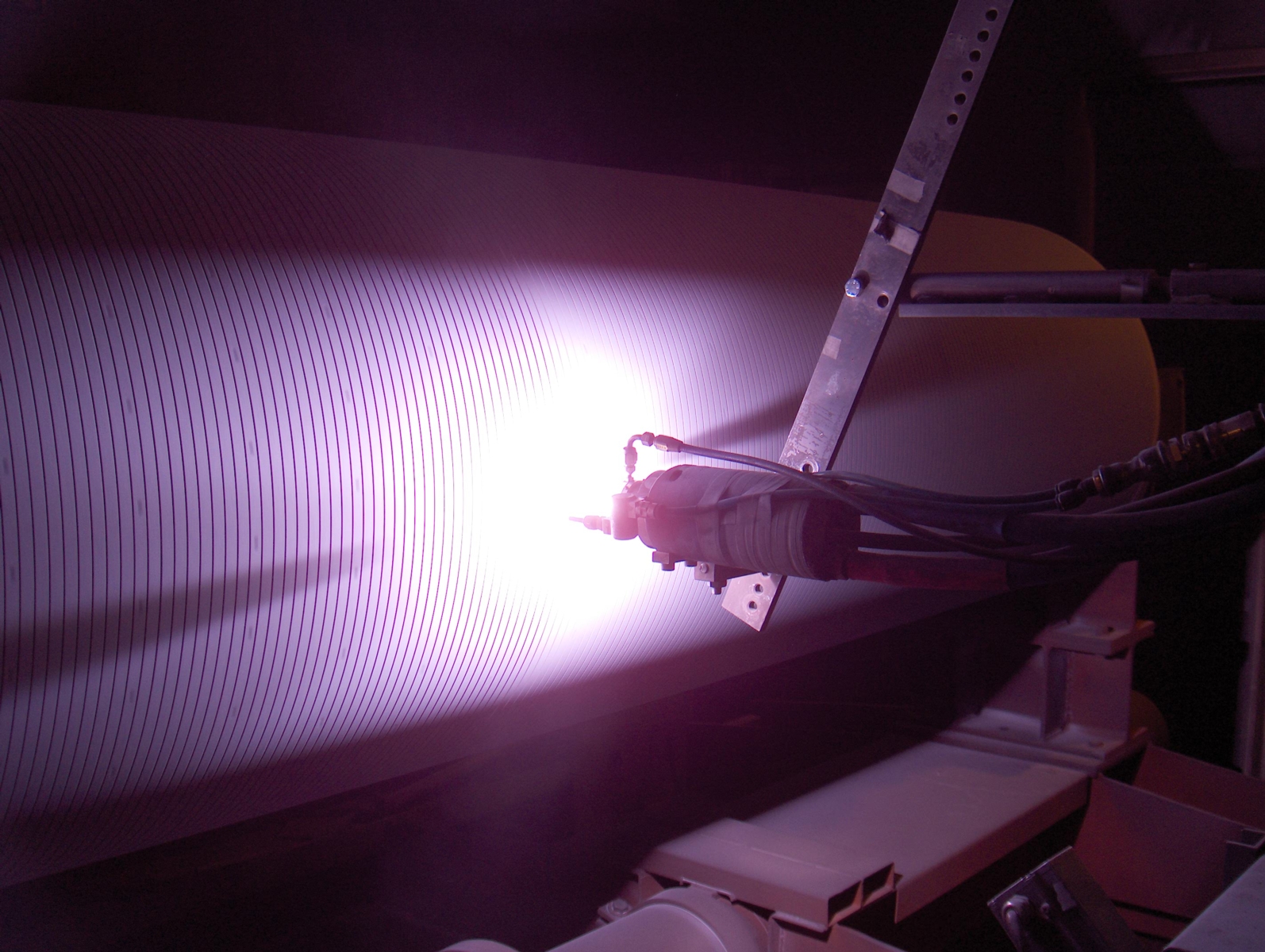
Thermal spraying is one of the most versatile processes when aluminum surfaces need to be made particularly durable or designed for specific functions. In this process, the coating material in powder, wire, or rod form is introduced into a hot gas or plasma jet, melted, and applied to the workpiece at high speed.
Depending on the material and spraying process, very different coating properties result:
- Metallic coatings (e.g., aluminum, zinc, nickel, or their alloys) are often used as cathodic corrosion protection or as adhesion promoters for subsequent systems.
- Hardmetal and carbide coatings (e.g., Cr₃C₂-NiCr or WC-CoCr) provide extreme wear protection under high temperature and pressure loads.
- Ceramic coatings (e.g., Al₂O₃, TiO₂) provide high hardness and electrical insulation, but are more brittle than metallic variants.
Buser Oberflächentechnik AG employs various processes such as flame spraying, arc spraying, HVOF (High Velocity Oxy Fuel), and plasma spraying. For aluminum substrates, the process parameters are selected to ensure that the thermal stress on the base material remains low.
Thermally sprayed coatings are particularly suitable for applications where mechanical abrasion, cavitation, or corrosion occur simultaneously. Regular quality inspections ensure consistent performance.
Quality Assurance & Standards
Reproducible coating quality is crucial for ensuring the long-term functionality of a component. That is why the coating of aluminum at our facility is subject to clearly defined testing and documentation standards. These ensure that every coating meets the required properties regarding thickness, adhesion, porosity, and corrosion resistance.
Key standards and testing methods include:
- ISO 2360 – Coating Thickness Measurement:
This eddy current method is used for the non-destructive determination of non-conductive coatings on conductive, non-magnetic metals such as aluminum. It enables consistent quality control across the entire surface. - ISO 2409 – Cross-cut test:
Evaluates the adhesion of a coating by scratching a grid into the surface. Adhesion is visually graded into classes (0–5). - ISO 9227 – Salt spray test:
Used to evaluate corrosion resistance under accelerated conditions. It provides comparable data for different coating systems. - ISO 7599 / ISO 10074 – Anodic Oxide Coatings:
Specify the requirements for decorative and hard-anodized aluminum, including coating thickness, hardness, and sealing.
Buser documents all tests in measurement and test reports, which are provided upon the customer’s request. For sensitive applications (food contact, chemical industry, etc.), a porosity test (high-voltage test) can additionally be performed to confirm the integrity of the coating.
Food Contact & Compliance
For use in food processing facilities or packaging machines, aluminum coatings must meet strict legal requirements. The goal is to ensure that no substances hazardous to health can migrate from the coated component into food.
The legal basis in Europe is provided by Framework Regulation (EC) No. 1935/2004, which defines the general requirements for materials intended to come into contact with food. In addition, Regulation (EU) No. 10/2011 applies to plastics, establishing a list of permitted substances (positive list) as well as migration limits.
For customers in the food industry, Buser provides material certificates, declarations of conformity, and test documentation upon request. This allows plant components to be validated in a legally compliant manner.
Your Project: Having Aluminum Coated
Whether it’s a prototype, a single part, or a series-produced component: For a technically and economically optimal solution, the coating system should always be precisely tailored to the specific application. We support you throughout the process, from the initial consultation to the documented quality inspection:
- Requirements analysis
Clarification of operating conditions: temperature, media contact, mechanical stress, electrical requirements. - Process selection
Selection of suitable coating systems (e.g., ECTFE, PTFE, hard anodizing, or thermal spraying) while taking standards and food safety into account. - Process planning and sample coating
Determination of pretreatment, application method, and curing parameters; optional production of sample parts for verification. - Quality testing and documentation
Measurement of coating thickness (ISO 2360), adhesion (ISO 2409), porosity testing, and, if necessary, corrosion testing (ISO 9227). - Mass production coating
Performed under controlled process conditions with full traceability.
Buser transparently documents all relevant test and process data, ensuring that the suitability of the coating for the respective application remains clearly traceable.
Thanks to our broad portfolio of processes and our strong consulting expertise, customers receive a solution that is functionally sound and compliant with regulations.